
When designing or maintaining an air compression system, the reliability of the components determines your operational efficiency. Pneumatic hose fittings are often used in industrial automation and workshop pneumatic tools. Without them, pressurized air cannot be safely transferred from the compressor to the tool end, resulting in costly energy waste and system failures.
In this comprehensive guide, we’ll explore various types of fittings, material differences and best installation practices to help you build a robust, leak-free pneumatic system.
What Are Pneumatic Hose Fittings?
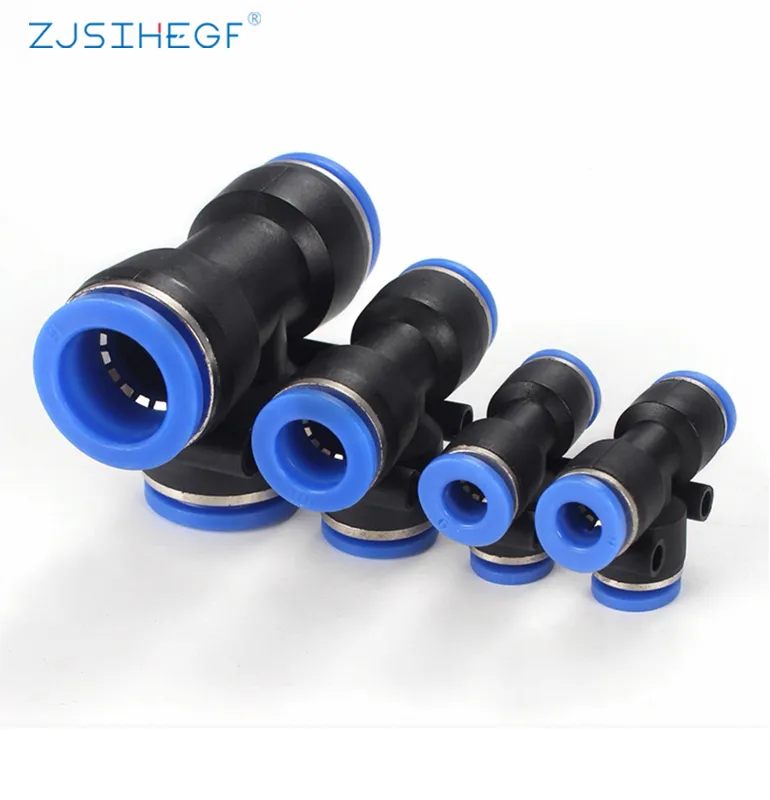
Pneumatic hose fittings – commonly referred to as air line connectors or adapters – are mechanical devices used to connect pipes, tubes, or hoses in pneumatic (gas) systems. Unlike hydraulic fittings, which have to withstand high liquid pressures, pneumatic fittings are specifically designed for compressed air systems and typically operate at pressures between 80 and 150 PSI (pound force/square inch).
These fittings have three main functions:
- Connection: Connect a hose to a tool, valve or cylinder.
- Control: Regulates the flow direction or pressure (e.g. flow control fittings).
- Sealing: Prevent air leakage to maintain system efficiency.
From quick-disconnect connectors that allow quick tool change to permanent compression fittings for rigid piping systems, the pneumatic hose fittings category covers a variety of components designed for specific environments and pressures.
Why Are High-Quality Fittings Important?
The use of substandard or mismatched fittings is the main reason for the pressure drop of the air system. According to the U.S. Department of Energy leakage may account for 20-30 % of compressor output in poorly maintained systems.
- Energy Efficiency: Leak-free sealing means that your compressor’s workload is reduced, saving power.
- Tool Performance: Stable pressure ensures that the tool runs at peak torque and speed.
- Safety: High-quality fittings prevent the hose from whipping under pressure, a common workplace hazard.

Types of Pneumatic Hose Fittings
We classify the most common pneumatic hose fittings according to the connection mechanism.
Push-to-Connect Fittings
It is the most popular choice due to its ease of use in modern industrial applications.
How they work: Just push the tube into the fitting until locked. The release ring allows easy disassembly.
Suitable for: Nylon and polyurethane (PU) pipe.
Pros: Instant connection, no need for tools and reusable.
Cons: If the pipe incision is tilted or scratched, it may leak.

Compression Fittings
How they work: The nut is tightened on the casing (or olive ring) and pressed on the tube to form a seal.
Suitable for: Rigid pipe such as copper pipe or hard plastic pipe.
Pros: Extremely high pressure resistance, very strong.
Cons: Slow installation; the casing usually deforms permanently after use.
Barbed Fittings
How they work: There are ridge protrusions (barbs) on the fitting, which can grasp the inside of the hose. It is usually necessary to add a hose clamp to ensure safety.
Suitable for: Soft rubber or silicone hose.
Pros: Simple, strong, reliable in a high vibration environment.
Cons: Difficult to remove once installed; need a fixture.
Cam and Groove (Camlock)
How they work: Close two control rods to lock the male head and the female head together.
Suitable for: Large diameter hose (more than 1 inch) in construction or heavy industry.
How to Choose the Right Material of Pneumatic Hose Fittings?
The durability of your pneumatic hose fittings largely depends on the material. The following is a classification of common materials:
| Material Comparison Table of Pneumatic Hose Fittings | ||||
|---|---|---|---|---|
| Material | Durability | Corrosion Resistance | Cost | Best Application |
| Plastic (Composite) | Medium | High | Low | Light industrial, clean rooms, robotics. |
| Brass | High | Medium | Medium | General workshops, air tools, plumbing. |
| Stainless Steel | Very High | Very High | High | Food processing, chemical plants, marine. |
| Aluminum | Medium | Medium | Medium | Lightweight applications, aerospace. |
Why Choose Brass?
Brass is the industry standard for pneumatic hose fittings. It provides an excellent balance between strength and cost. It has rust resistance (although not as good as stainless steel) and moderate hardness, and can form a good seal with the harder metal without damaging the thread.
Why Choose Stainless Steel?
If your environment involves the use of irritating chemicals for cleaning (such as food and beverage facilities) or exposure to salt water, stainless steel must be used. It can prevent corrosion, otherwise corrosion may pollute the gas source.
Understanding Thread Standards of Pneumatic Hose Fittings (NPT vs. BSP)
One of the most frustrating aspects of buying pneumatic hose fittings is dealing with incompatible threads. Mixed use of different types of threads will inevitably lead to leakage or component damage.
NPT (National Pipe Taper)
Region: United States and Canadian standards.
Design: The thread is tapered. When you tighten the fitting, the threads will wedge together to form a seal.
Tip: Be sure to use Teflon tape or thread sealant on NPT fittings.
BSP (British Standard Pipe)
Region: European, Asian and Australian standards.
- BSPT (Tapered): Similar to NPT, but with different thread angles (55 °vs. 60 °).
- BSPP (Parallel): The thread does not taper. Sealing depends on adhesive gaskets or O-rings.
Warning: Do not force the NPT fitting into the BSP port. They may be screwed in for a few turns, but under pressure they slip and leak.
Installation Guide for Pneumatic Hose Fittings: Ensure A Leak-Free Seal
Correct installation is as important as buying the right parts. Please follow these steps to properly install your pneumatic hose fittings.
Step 1: Prepare the Tubes or Hoses
If you are using push-to-connect fittings, the notch of the tube must be completely vertical (90 degrees). Please use a dedicated pipe cutter instead of scissors or pliers, because this will cause the tube to deform into an oval shape that results in leakage.
Step 2: Apply Sealant (For Threaded Fittings)
For the NPT fitting, 2-3 turns of PTFE tape are wound along the thread direction (clockwise). Otherwise, remember to use a liquid thread sealant.
Note: Do not wind the tape around the first thread to prevent the tape debris from entering the airflow and blocking the tool.
Step 3: Tighten Properly
For Push-to-Connect: Push the tube until it hits the internal block. Gently pull back to make sure the internal teeth have caught the tube.
For Threaded Fittings: Manually tighten, and then use the wrench to tighten another 1.5 to 2 laps. Excessive tightening may cause the shell to break, especially the plastic port.
Troubleshooting Common Issues of Pneumatic Hose Fittings
Even the best pneumatic hose fittings fail if they are abused or improperly maintained. The following are the common questions sorted out in the form of Q&A style to help you troubleshoot.
Why is air leaking from my push-to-connect fitting?
This is usually caused by scratches on the tube or debris in the O-ring.
The Solution: Unplug the tube, cut off the damaged end ( about 1 / 2 inch ) and reinsert it. Ensure smooth incision.
Why does my fitting break down under high pressure?
The rated pressure of the fitting you are using may be lower than the system pressure, or the pipe material is too soft ( for example, soft silicone is used in quick fittings designed specifically for rigid nylon ).
The Solution: Check the PSI rating on the fitting and ensure that your hose hardness ( durometer ) meets the fitting specifications.
How often should I replace the fitting?
The fitting has no fixed validity period, but the plastic composite fitting will become brittle after years of ultraviolet irradiation or high temperature.
The Solution: Check the fitting every year. If you see a crack or hear a hissing, please replace it immediately.
Conclusion
Choosing the right pneumatic hose fittings requires a comprehensive consideration of your pressure requirements, environmental conditions and specific pipe materials used. Whether you’re choosing a convenient push-to-connect system or a robust brass clip connector, ensuring a safe seal is critical to safety and efficiency.
By following this guide, you can eliminate leakage, extend the service life of pneumatic tools, and build a pneumatic system that can run smoothly in the next few years.