
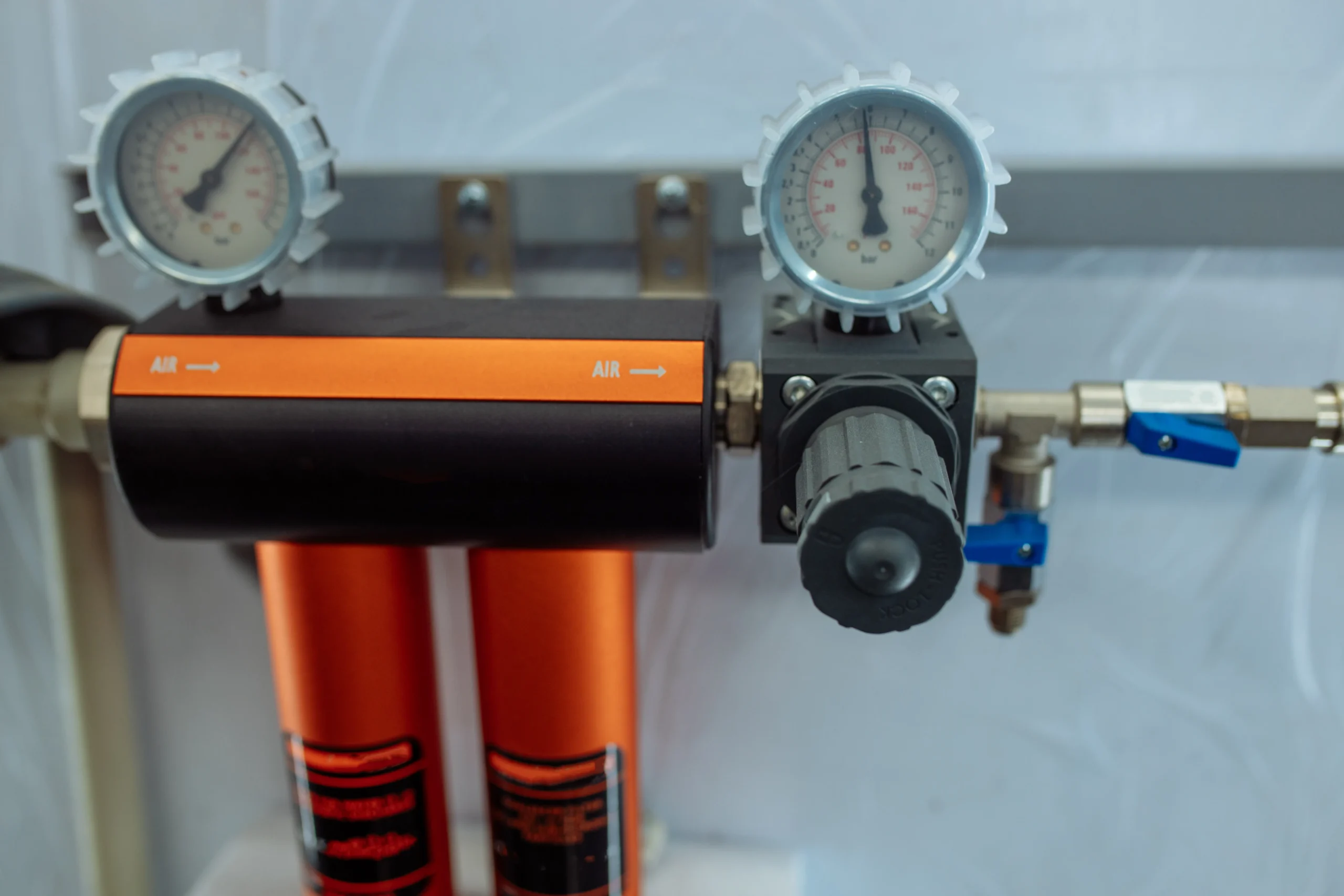
In the construction or upgrading of a pneumatic system, the selection of an appropriate pneumatic solenoid valve is the core step to ensure the stable operation of the system. Improper selection may lead to system failure, pressure loss, energy waste and high downtime costs. Whether in industrial assembly lines, packaging machinery, or automated process control, the control accuracy of pneumatic solenoid valves for compressed air directly determines the response speed, working reliability and overall service life of the system.
What is a Pneumatic Solenoid Valve?

Pneumatic solenoid valve is a mechatronic device used to control the flow direction of compressed air in the pneumatic circuit. When the electrical signal excites the electromagnetic coil, a magnetic field is generated, pushing the plunger or spool to move, directing or blocking the airflow to downstream actuators, such as cylinders, jaws or swing cylinders.
Main components of solenoid valve include:
- Solenoid Coil: Generates electromagnetic force
- Plunger/Pilot Piston: Move to open/close the flow path
- Valve Body with Ports: Inlet, outlet and exhaust channels
- Spring Return Mechanism: Return the spool to the initial position when the power is turned off.
- Seal Material
View our Analysis of 6 Key Control Components of Pneumatic Air Cylinder
How Does a Solenoid Valve Work?
1. De-energized State: The spring keeps the plunger in the default position (normally closed or normally open) and correspondingly blocks or allows the airflow to pass.
2. Energized State: The current flows through the coil, generates a magnetic field, attracts the plunger and drives the spool to change the direction of the airflow.
3. Return: After the power is turned off, the spring forces the plunger back to its initial position.
Two main working modes:
- Direct-Acting Solenoid Valve: Solenoid directly drives the valve mechanism. It is most suitable for low pressure, zero pressure or vacuum applications.
- Pilot-Operated/Servo Solenoid Valve: Small pilot electromagnets use pipeline pressure to drive a larger main spool. It is suitable for large flow and high pressure industrial circuits.
[ Pneumatic Air Cylinder the 7-Kinds Classification and Application → ]
7 Practical Tips for Choosing Pneumatic Solenoid Valves

1. Determine the Correct Valve Structure (2/2, 3/2, 5/2, 5/3)
The solenoid valves are classified according to the number of ports and switching positions. Choosing the wrong structure is one of the most common and costly errors in the design of pneumatic systems.
| Solenoid Valve Structure Type Table of Pneumatic Solenoid Valve | |||
|---|---|---|---|
| Valve Type | Ports | Positions | Best Use Case |
| 2/2 | 2 | 2 | Simple on/off flow control |
| 3/2 | 3 | 2 | Single-acting cylinders, pilots |
| 4/2 | 4 | 2 | Double-acting cylinders, double solenoid |
| 5/2 | 5 | 2 | Double-acting cylinders, spring return |
| 5/3 | 5 | 2 | Mid-position hold, float, or pressurize both ports |
For most dual-acting pneumatic cylinders, 5/2 solenoid valve is the industry standard choice. The 5/3 center-pressurized/center-exhausted valve is the right solution when median control is required (such as keeping the load in a specific position).
2. Matching interface size and flow coefficient (Cv/Kv value)
The interface size and flow coefficient – expressed in Cv (inch) or Kv (metric) – determine the amount of compressed air that the valve can pass through. Small size will cause pressure drop and slow action of actuator; larger size wastes energy and increases costs.
General Selection Reference:
- Small bore cylinder (≤ 32 mm): G1/8 ” or G1/4 ” interface
- Medium bore cylinder (40-63 mm): G3/8” interface
- Large bore cylinder (≥ 80 mm): G1/2 ” or larger interface
Suomang Electrical Note: Please be sure to calculate the required CV value based on the cylinder diameter, stroke and cycle frequency. Most manufacturers provide flow charts for reference.
3. Confirm the Operating Pressure Range
The working pressure range of the standard pneumatic solenoid valve is 0.15-1.0 MPa (1.5-10 bar). However, there are important differences between direct action and pilot action:
- Direct-Acting Valve: It can work from 0 bar, which is very important for vacuum or ultra-low voltage systems.
- Pilot-Operated Valve: The minimum inlet pressure (usually 0.15 MPa) is required to drive the spool to change direction.
Before selecting a control valve, it is important to verify the maximum rated pressure (safety upper limit) and the minimum operating pressure (functional requirements).
4. Select the Correct Voltage & Electrical Specification
The solenoid valve is available in both AC (AC: 110V, 220V) and DC (DC: 12V, 24V) specifications. 24 V DC has become the mainstream standard of modern industrial automation, because of its good compatibility with PLC, low arc risk, and is suitable for safety systems.
Other electrical precautions:
- Low-Power Coil ( 0.5W-2W ): Reduces heat generation and improves energy efficiency.
- Insulation Class: H or F grade is selected for a high temperature environment.
- Protection Rating: IP65 (dustproof, waterproof column) or IP67 (short-term immersion) for harsh environments .
- Connector Type: DIN 43650 A/B is the most widely used solenoid valve connector in the field of global automation.
5. Select the Sealing Material According to the Working Environment
Internal seals are the most vulnerable parts to chemical erosion and wear. Misselected materials can lead to swelling, cracking and premature failure.
| Material Table of Internal Seals of Pneumatic Solenoid Valve | ||
|---|---|---|
| Seal Material | Compatible Media | Avoid |
| NBR (Nitrile) | Dry air, mineral oil, water | Ozone,aromatic solvents |
| FKM (Viton) | Hot air, chemical media | Ketones,esters |
| PTFE | Aggressive chemicals,ozone | High mechanical wear conditions |
| EPDM | Steam, hot water, mild chemicals | Petroleum-based oils |
For standard compressed air applications, NBR seals provide the best balance between performance and cost. For food grade or pharmaceutical use, please select sealing materials and stainless steel solenoid valves that meet FDA standards.
6. Evaluation of Manifold Mounting in Multi-Valve Systems

When the machine requires four or more solenoid valves, the manifold base is more practical than a separate base plate installation. Pneumatic solenoid valve system based on integrated valve manifold has the following advantages:
- Centralized management of gas supply, exhaust and electrical connection
- Significantly reduce pipeline complexity
- Easier fault diagnosis and part replacement
- Supports fieldbus communication (DeviceNet, PROFIBUS, EtherNet/IP, IO-Link)
Common solenoid valve manifold standards include ISO 15407-1/ISO 15407-2, ISO 5599-1/2 and VDMA 24345. Ensuring that your solenoid valve meets these standards can achieve interchangeability between brands and simplify future upgrades.
7. Considering the matching of FRL/Air Combination
The FRL units must be correctly matched with the flow requirements of the solenoid valve. The small size of FRL will make the valve air supply insufficient; if the size is too large, the cost and area will be increased.
FRL Key Selection Criteria:
- The output pressure of the pressure regulator is set within the rated working pressure range of the solenoid valve.
- For humidity-sensitive or oil-free valve designs, use a coalescing filter (0.01 μm).
- If a dry-type (oil-free) solenoid valve (Dry-Type/Oil-Free Solenoid Valve) is used, the oil mister-oily gas should be omitted to degrade the valve seal over time.
- The size of the FRL interface must match with the main gas supply pipeline of the system.
[ How to choose a FRL/Air Combination for your system → ]

Quick Selection Checklist
Before placing an order, please confirm item by item:
- Has the valve structure been confirmed (2/2, 3/2, 5/2, 5/3)?
- Has the interface size and CV value matched the cylinder requirements?
- Is the working pressure range (minimum and maximum) verified?
- Is the voltage and connector type compatible with the control system?
- Has the sealing material been rated for the working medium?
- Do you need to install a manifold or bottom plate?
- Does the size of FRL/air combination match?
- Is the IP protection level suitable for the working environment?
- Do you need a quick exhaust valve or manual valve?
Conclusion
The correct selection of pneumatic solenoid valves is the key to ensure the performance, efficiency and long-term stable operation of the pneumatic system. In the selection process, it is necessary to comprehensively consider various factors:
First, deeply understand the working principle of the solenoid valve, and clarify its structure and action mechanism; Secondly, according to the requirements of the actuator, the valve body structure and flow coefficient (Cv value) are matched. At the same time, the compatibility with FRL and the feasibility of manifold integration are evaluated. Finally, the appropriate sealing material is selected according to the characteristics of the working medium.
Following the above steps, the appropriate solenoid valve specifications can be determined for single machine debugging or whole line design.
Scientific selection decision-making is helpful to avoid the cost of troubleshooting, unplanned downtime risk and premature replacement of components in subsequent operation, so as to improve the overall economy and reliability of the system.
What is the difference between direct-acting and pilot-operated solenoid valves?
Direct-acting is a valve core driven directly by a coil, which can work from 0 bar. It is suitable for low pressure, vacuum or small flow occasions, but it has high power consumption. Pilot-operated uses pipeline pressure to assist in driving the main valve core, which requires a minimum starting pressure (usually≥0.15 MPa), is suitable for large flow and high pressure industrial applications, and has low coil power consumption. Vacuum or zero pressure systems must choose a direct-acting type.
What is the difference between single solenoid and double Solenoid Valve?
Single solenoid has the function of fail-safe, which is suitable for occasions where power-off automatic return is required (such as clamping and blocking cylinders). Double solenoid has a coil at both ends, which keeps the current position unchanged after power failure, which is suitable for occasions where memory position is needed (such as keeping after commutation). Simple principle: need to turn off the power to return to the position → select the electronic control; need to turn off the power to keep the position → select the double electric control.
Pneumatic solenoid valve does not act, what is the most common reason?
According to the priority of investigation, the three most common reasons are as follows: 1 electrical failure-checking whether the coil power supply voltage is normal (measuring the coil resistance with a multimeter, if the deviation is too large, the coil is burned); 2 Insufficient gas source pressure-confirm that the gas supply pressure is within the rated range of the valve (the pilot valve needs to be≥0.15 MPa); (3) Contamination in the valve or damage to the seal (Seal) -filter blockage or impurity stuck to the spool. According to this order, more than 90 % of the faults can be quickly located.
Pneumatic solenoid valve should choose 24V DC or 220V AC?
24 V DC is preferred in industrial automation. The reasons are: direct compatibility with PLC, no arc risk, less coil heating, and safer wiring. 220V AC is only used in the case of old equipment modification or no DC power supply. The connector is recommended to use DIN 43650 A, which is a global industrial standard interface, and it is convenient to change the coil and wiring.
What are the practical advantages of the manifold over the separate installation of solenoid valves?
When the system has more than four solenoid valves, the advantages of Manifold are obvious: centralized management of gas source and exhaust, greatly simplified wiring, support for fieldbus communication (such as IO-Link, EtherNet/IP), faster maintenance and fault replacement. For small systems with only 1 ~ 3 valves, Sub-base Mounting is more economical and flexible.