
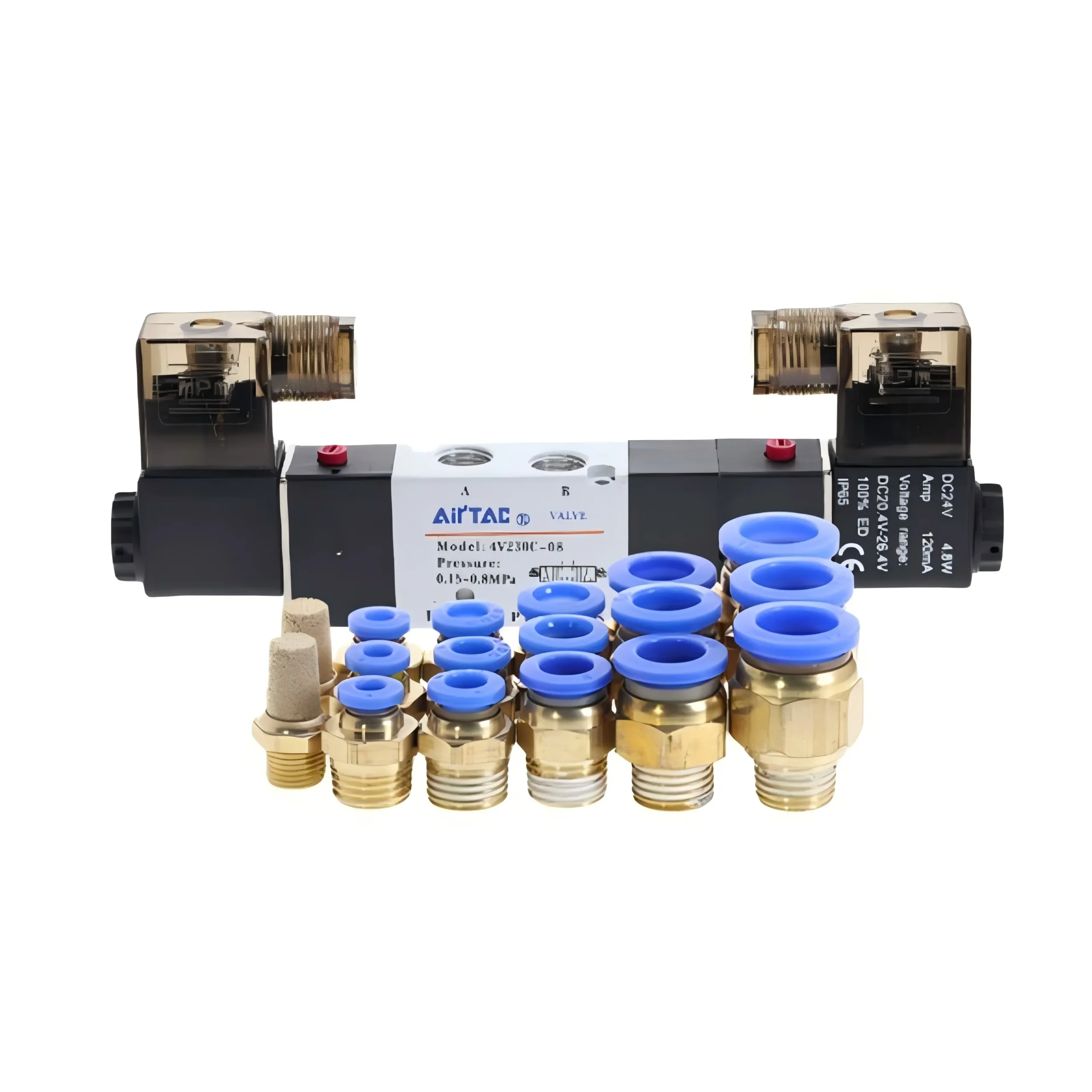
In the construction of the pneumatic control system, many people are worried about how to choose the right valve type. Whether it is to achieve fully automated production or to ensure the safety control of the operator, understanding the difference between the core components is the first step to success.
This article will explore the two most common valves in industrial automation : solenoid valve and pneumatic manual valve to help you make a wise choice.
What is a Solenoid Valve?
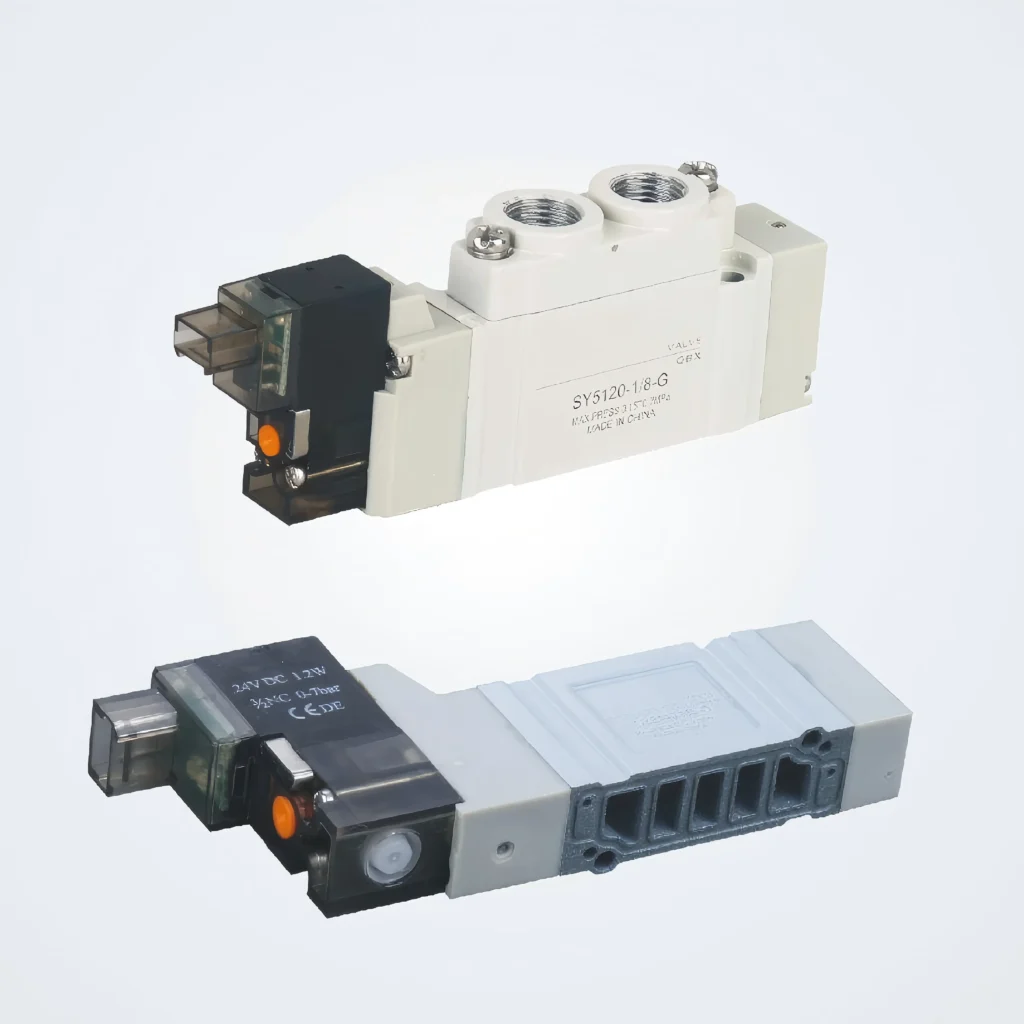
The solenoid valve can be described as an electric tap and can be used as a relay to control the operation of the machine. In addition, the transmission of power to the coil will generate a magnetic field, so that the metal plunger in and out of the pin. This either opens the channel or closes the channel. After power off, the valve returned to the initial state.
What is a Pneumatic Manual Valve?
Pneumatic manual valves are hand-operated devices used to control the flow of liquids, air and gases in the system.
More simply, pneumatically operated valves are easier to use because they are designed to control the flow of gas, air or liquid. To close or open the valve, you need to turn, pull or push the knob.
Key Differences Between Solenoid Valves and Pneumatic Manual Valves
Solenoid valves and manual valves work the same, controlling the flow of liquid or gas through the pipeline, but their working principles are completely different. Knowing these differences will make it easier to choose the solution that best suits your needs. So, let ‘s begin to discuss the main differences :
| Feature | Solenoid Valve | Pneumatic Manual Valve |
| Operation | Automatic (electric) | Manual (hand-operated) |
| Response Time | Very fast | Slower |
| Installation | Requires wiring | Simple setup |
| Maintenance | Moderate (check coils) | Low |
| Cost | Higher upfront | More affordable |
| Power Requirement | Needs electricity | No power needed |
| Suitable For | Automated, high-speed systems | Simple, hands-on tasks |
How They Work?
Solenoid valve : Solenoid valve is automatic work ; it is driven by electricity. When the current passes through the coil, a magnetic force is generated, thereby opening or closing the valve.
Pneumatic manual valve : The manual valve requires someone to rotate, pull or push to adjust the flow. The solenoid valve will automatically complete all the work, not like the manual valve that requires manual work.
Speed and Precision
Solenoid valves : Solenoid valves ‘ response times are almost instantaneous, meaning they can be turned on or off in milliseconds. Therefore, this is beneficial to the fast-paced system.
Pneumatic manual valve : Due to the need for hand action, it takes more time, but this can better control the flow.
Installation and Maintenance
Solenoid valve : need some electrical wiring and regular inspection.
Pneumatic manual valve : From a maintenance point of view, basic valves are simpler because they do not require wiring or special instruments. In addition, they are also easier to install. If you are most concerned about simplicity, then the basic valve is the ideal choice.
Cost and Use Case
Solenoid valve : Solenoid valve has a high initial cost, but is more valuable for systems that require faster automation.
Pneumatic manual valve : The manual valve is simple and the technology is relatively simple. Therefore, the cost is lower.
Energy Use
Solenoid valve : Solenoid valve requires a certain amount of electricity, which can be continuous power supply or on-demand power supply.
Pneumatic manual valve : On the contrary, manual valves do not require electricity that make them more practical in remote or off-grid areas.
Safety
Solenoid Valve : Solenoid valves are very useful for safety-critical applications because they can be shut down quickly in an emergency.
Pneumatic manual valve : In sensitive areas, automation is useful, but manual valves are human-operated, which can lead to delayed response in an emergency.
Control Options
Solenoid valve : It can be connected with sensors, timers, PLC and other equipment to achieve remote control.
Pneumatic manual valve : They can provide control to the user, but cannot be integrated with the control system.
Pros and Cons of Solenoid Valves
Pros:
- Remote control : remote operation can be carried out through the control room switch or computer program.
- High efficiency : It has an extremely fast response time and is suitable for high-frequency applications that require hundreds of switches per minute.
- Accuracy : with the sensor and timer, it can accurately control the flow and time.
Cons:
- Rely on power : Once the power is off, the valve will not work ( unless with manual operation function ).
- Complex maintenance : high requirements for the cleanliness of the medium, impurities are easy to block the pilot hole.
- High cost : the need for supporting electrical lines and control systems.
Pros and Cons of Pneumatic Manual Valves
Pros:
- Simple operation : simply rotate, push or pull easily. Unlike other types of valves, it does not require wiring or special tools.
- Economical : Compared with automatic valves, they are much more economical. If you consider the cost, manual valves are the ideal choice.
- Low maintenance : Lack of electrical components, low maintenance costs. After installation, they can usually remain quite maintenance-free for several years.
- Non-electric work : These devices do not consume electricity. Therefore, they are very suitable for use in emergency situations or remote areas.
- Complete control : You choose the right time to open or close the valve. This action can directly control the flow and timing.
Cons:
- Slow operation : manual valve is hand action, so can ‘t instantaneous response. Therefore, they are not suitable for use in sensitive working areas.
- Not suitable for automation : they cannot interface with sensors or timers. Therefore, they cannot be used in automated systems.
- Human error risk : If someone forgets, the system may face the risk of failure.
Suomang Electric Solenoid Valve and Pneumatic Manual Valve
At Suomang Electric, we know that different operating conditions require different solutions. Our products cover high-performance solenoid valves and durable pneumatic manual valves.
3R or 4R Series Pneumatic Manual Valve to 4R210-08
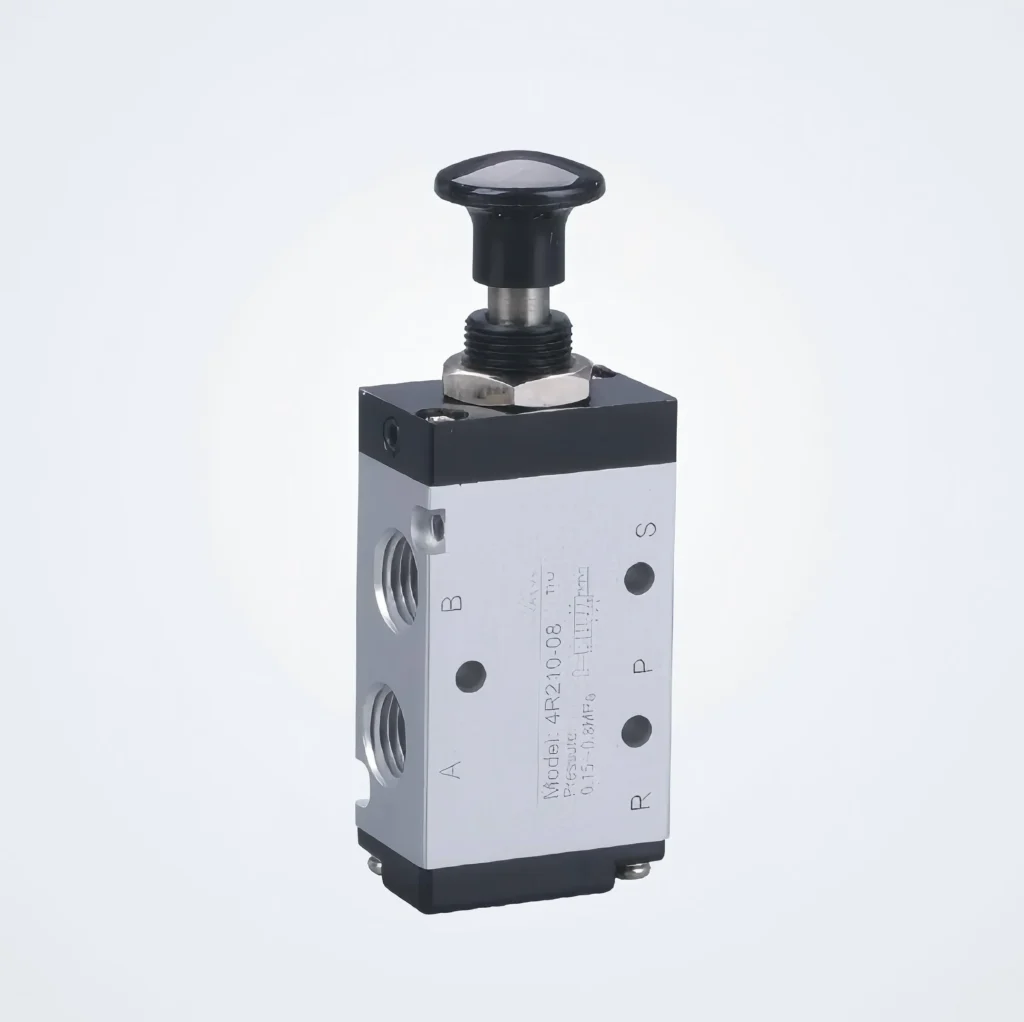
This valve is made of aluminum alloy, corrosion resistant and durable. Its metric design facilitates integration with international standard systems. The working pressure range is wide, suitable for most standard industrial gas sources ( 0-0.8Mpa ), and the peak pressure can reach 1.0Mpa that ensure system safety.
It is an ideal basic pneumatic manual control valve, which is often used in automatic production lines, gas path safety cut-off of mechanical equipment, test point control or as a standby emergency operation valve.
| Parameters | Details |
| Fluid | Air |
| Valve Body Material | Aluminum Alloy |
| Measurements | Metric system |
| Temperature | 0-60℃ |
| Normal working pressure | 0~0.8Mpa |
| Max.working pressure | 1.0Mpa |
3V1 Series Solenoid Valve to 3V1-06
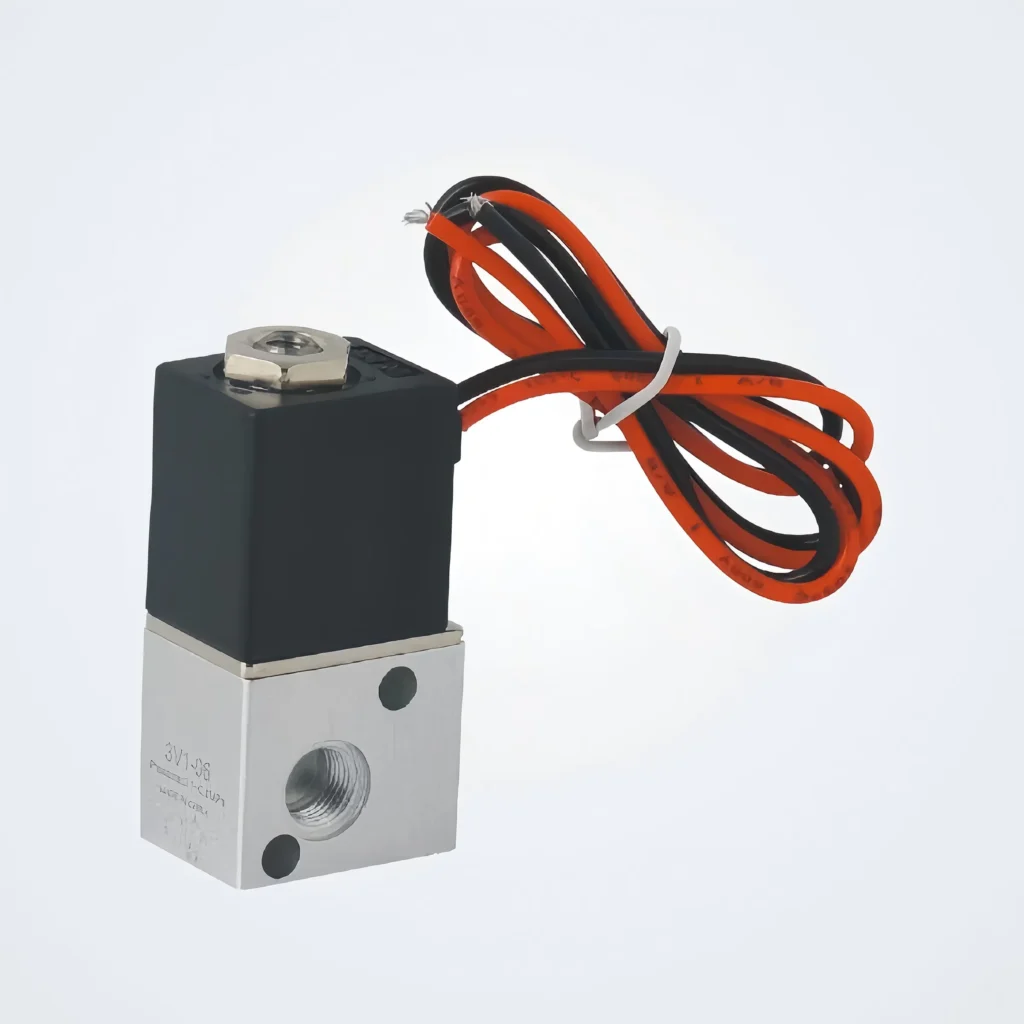
The 3V1-06 solenoid valve is suitable for industrial manufacturing to commercial services, even small household tools and food-grade applications. Its 1 / 8 inch interface and 1.2 mm aperture are very suitable for small and medium flow control scenarios. The direct-acting structure is simple and the response is fast.
| Parameters | Details |
| Fluid | Compressed air |
| Position number | 2 position 3 way |
| Orifice (mm) | 1.2 |
| Port size | 1/8 |
| Acting type | 0~0.8 |
| Ambient temperature | +5~60℃ |
| Voltage range | ±10% |
Conclusion
Choosing a solenoid valve or a pneumatic manual valve ultimately depends on your control needs.
Solenoid valves are irreplaceable if you pursue speed, automation and remote management.
Pneumatic manual valves are the best choice if you focus on safety, simplicity and availability in an electrically powerless environment.
Most efficient pneumatic systems are often hybrid : solenoid valves are used for primary control, and manual valves are configured for maintenance and emergency shut-off.
What is the Difference Between A Solenoid Valve and A Mechanical Valve?
Yes, many industrial solenoid valves are equipped with Manual Override. This is a small button or rotary screw located on the valve body, allowing manual forced switching of valve status by tool or finger during power-off commissioning or troubleshooting.
How to Activate A Solenoid Valve Manually?
In the power-off state, find the Manual Override near the solenoid valve coil. Depending on the type, you may need to press the button, use a screwdriver to rotate it, or pull it. This will simulate the mechanical action when the coil is energized and drive the spool to change direction.
What are the Two Types of Solenoid Valves?
Although there are many ways to classify, the two most common types are :
Direct Acting : Electromagnetic force directly drives the main spool, suitable for low pressure or small diameter.
Pilot Operated : Electromagnetic force opens a small hole ( pilot hole ), using the pressure difference of the fluid itself to push the main spool, suitable for high pressure and large diameter.
How to Test A Solenoid Valve Manually?
Two common methods :
Mechanical testing : Use the Manual Override button to see whether the valve is reversing. If the commutation is normal, the mechanical part of the valve body is good.
Electrical test : Use the multimeter to measure the resistance value of the coil. If it is infinite ( open circuit ) or close to zero ( short circuit ), the coil is damaged. In addition, the metal screwdriver is close to the coil when energized. If there is magnetic attraction, the coil works normally.